

Scientists Fail to Explain Acceleration of Object Approaching Hayabusa2
A new study has found that 1998 KY26 is too warm to be a 'dark comet': its acceleration cannot be sustained by ice sublimation. The authors consider the object to be a dehydrated asteroid.
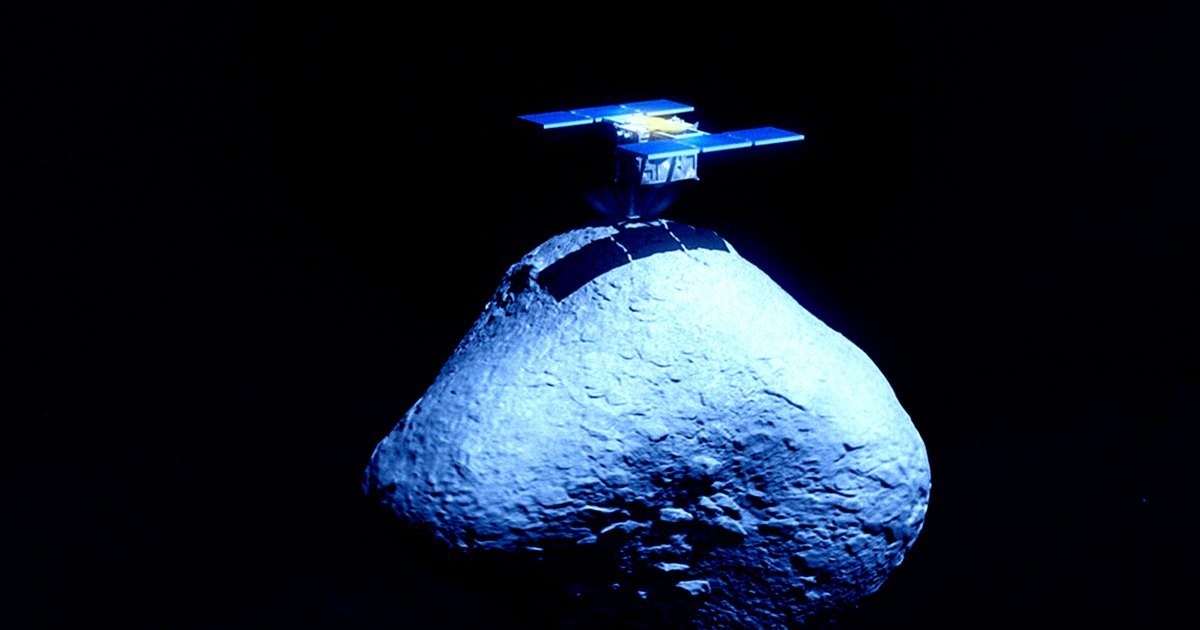
The acceleration of 1998 KY26 still lacks a confirmed explanation. One hypothesis, proposed by Harvard University astronomer Avi Loeb, suggests that the object could be an abandoned Soviet spacecraft launched nearly 40 years ago. Among more traditional theories was the idea of a 'dark comet'—a body resembling an asteroid but capable of accelerating due to gas release from ice evaporation.
Aerospace engineers Corbin Hansen and Masatoshi Hirabayashi from the Georgia Institute of Technology modeled the object's temperature based on previously obtained data. Even the coldest areas, according to their estimates, had temperatures above −77 degrees Fahrenheit. Under such conditions, subsurface ice reserves could not persist: the object would have depleted them in 62 years, which is brief compared to its presumed age of billions of years.
The researchers believe that 1998 KY26 has long since lost its water and is likely a dehydrated asteroid. Among possible causes of its acceleration, they also mention solar radiation pressure and forces arising from thermal radiation. The Japanese spacecraft Hayabusa2 is scheduled to rendezvous with the object in July 2031, which will allow for direct study.