

Enthusiast builds and launches solid-fuel rocket, reaches 9 km altitude
American enthusiast and YouTube blogger Joe Barnard launched a homemade rocket to an altitude of approximately 9.1 km. Due to a system failure, footage of the rocket's landing could not be captured.
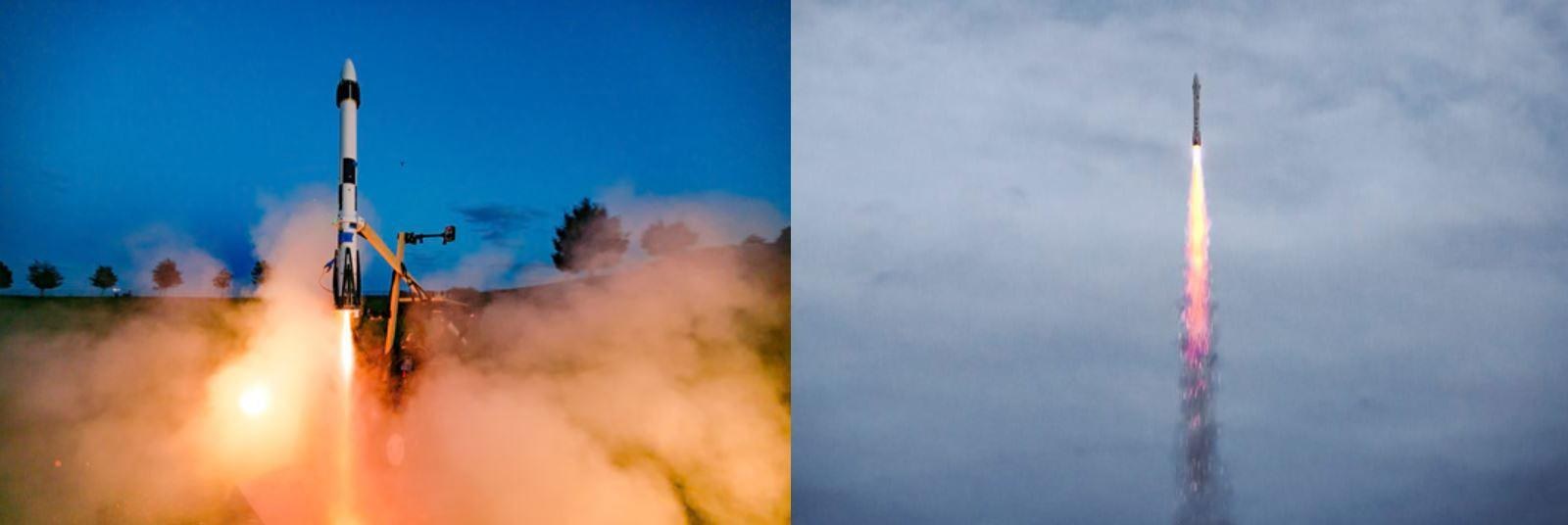
Barnard independently developed the rocket and its control system. The upper section of the fuselage was made from nine layers of fiberglass, while the lower section was reinforced with a carbon fiber tube. The solid-fuel engine generated around 2,300 N of thrust, and the enthusiast prepared the fuel mixture himself.
Near the apex of its trajectory, the rocket ejected a capsule containing a camera. The Fluctus computer measured speed, pressure, and altitude, as well as controlled the camera's activation and parachute deployment. Barnard disassembled a GoPro Hero 12, inverted it, and installed it in a 3D-printed casing.
To prevent the capsule from tumbling after separation, it was equipped with a gyroscope and a rotating flywheel. A decelerating streamer and GPS tracker were included for its return. The camera captured the parachute deployment from an altitude of about 9 km.
However, Fluctus mistakenly interpreted pressure fluctuations as signs of an emergency descent and prematurely triggered the emergency protocol. The capsule and parachute mechanisms activated while the rocket was still traveling at over 1,127 km/h. Aerodynamic forces tore the parachute and ripped it from the upper section. The camera remained intact and was found approximately 350 meters from the launch site.