

Practical measures to reduce statelessness reviewed in Tashkent
A training session for Ministry of Internal Affairs staff on preventing and reducing statelessness was held in Tashkent. Participants studied international standards and procedures for protecting stateless persons.
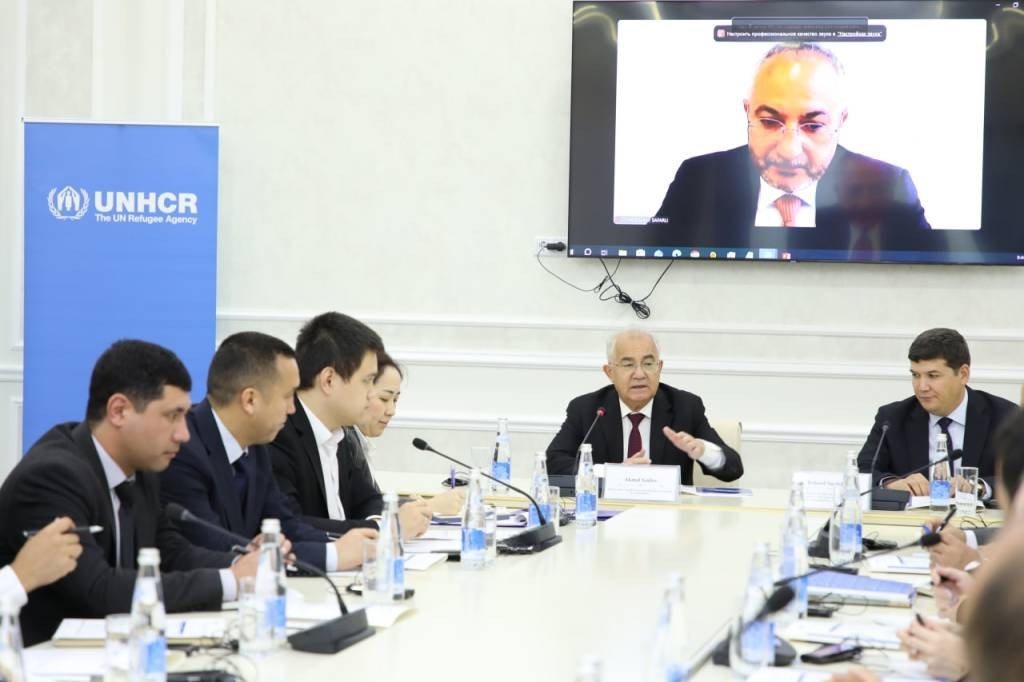
The event was organized by the National Human Rights Centre of the Republic of Uzbekistan and the Office of the United Nations High Commissioner for Refugees as part of the Joint Action Plan for 2026.
Participants reviewed the concepts of 'stateless persons,' 'persons at risk of statelessness,' and 'persons with undetermined citizenship.' They separately discussed the identification of such individuals, data collection, status determination, the role of evidence, and the procedure for reviewing decisions. The training also incorporated the experiences of Central Asian countries and other states.
Director of the National Centre Akmal Saidov noted that cooperation with UNHCR on this issue has been developing since 2021. According to him, the adoption of a new version of the law 'On Citizenship' in 2020 was one of the important steps in this area. While from 1992 to 2016, 482 people acquired Uzbek citizenship, since 2016 this figure has exceeded 91,000.
Following the training, the parties discussed the preparation of joint publications: translations of international conventions into the state language, practical guides, and a comparative analysis of the legislation of Central Asian countries.